

Lifestyle/Nutrition
How to Get Rid of Hip Dips Without Surgery: Exercises, Tips, and More



Hip dips, commonly known as violin hips or hip dents, are the inward curves that occur just below the hip bones on each side of your body. They are a natural part of your bone structure and can appear more pronounced depending on your body type and genetics. While some people embrace them as a unique aspect of their body, others may feel self-conscious and desire to reduce or eliminate them.
If you belong to the latter group and are dealing with so-called "violin hips" and are not a fan of them, this guide is for you.
What you can do depends mainly on the cause of your hip dips. For most, genetics causes their pelvic bone structure to be higher than average, causing the fat to distribute and shape their hips in the way we all know. If your bone structure is the culprit, some muscle-building may help, but a cosmetic procedure is likely the best route.
If you've got excess fat in the love handle area contributing to the development of a dip, you might improve your curves with diet and workouts. Another tip you can follow is to start wearing clothing that de-emphasizes the appearance of hip dips.
Here are different approaches to get rid of hip dips without surgery, followed by more direct treatment options.
How To Smooth Your Shape to Reduce Hip Dips
The right clothing choices can minimize the appearance of hip dips, creating a smoother silhouette that enhances your natural curves. Here's how to dress strategically to achieve this effect:
What to Avoid
-
Low-Rise and Tight-Fitting Bottoms: Avoid tight, low-waisted pants, leggings, or skirts that sit right at the hip dip area. These garments create a "cut-off" effect that draws attention to the indentation and can make hip dips appear more pronounced.
-
High-Waisted Bottoms: While trendy, high-waisted bottoms can sometimes emphasize the contrast between your waist and hip area, making hip dips more noticeable depending on your body type.
What to Embrace
-
Flowing and A-Line Silhouettes: Choose longer tops that flow past your hip area, A-line skirts, and dresses with gentle flares. These styles create a smooth line from your waist down, effectively camouflaging indentations.
-
Mid-Rise Bottoms: Opt for pants and skirts that sit at your natural waist rather than low on your hips. This placement helps create a more balanced silhouette.
-
Compression Shapewear: Well-fitted compression undergarments can help smooth out love handles and create a more even line from your waist to your thighs.
-
Hip-Padded Underwear: Specialized undergarments with subtle padding can fill in hip dips and create the appearance of fuller, more rounded hips.
-
Belt Placement: When wearing belts, position them at your natural waist rather than on your hips to create a more defined waistline and smoother hip transition.
The Role of Cardio and Muscle-Building
Beyond apparel choices, exercise is another effective way to reduce hip dips without a procedure. Although exercise cannot address the root cause of most indentations, which is the structure of your bones, it can build muscle that may fill in hip dips.
It is important to note that working out can help some people more than others, given that the cause of hip dips varies from person to person. Cardio may be a great option if your hip dip is the result of excess fat. To fill in a hip dip caused by bone structure, building muscle to fill in the dent is a more viable route.
Cardiovascular Exercise
For those with hip dips due to excess love handle or saddlebag fat, cardio-based routines can help smooth out their appearance. In addition to improving heart health, cardio can help lower overall body fat, including in the hip dip area.
At least 30 minutes of light to moderate cardio exercise daily can be incredibly beneficial. Here are five great cardio routines:
-
Running or Jogging
-
Cycling
-
Swimming
-
Dancing
-
High-Intensity Interval Training (HIIT)
One important caveat is that higher-intensity cardio, such as sprinting and faster runs, can burn more calories in the moment but also often lead to cravings afterward.
Those looking to lose fat with cardio should ensure they are in a caloric deficit. This is often easier when embracing lower-intensity work, like zone 2 running or light cycling. Lighter forms of cardio also come with less injury risk, which is critical for any exercise-based fat loss plan, given that consistency is key.
Aim to perform about 80 percent of your cardio at low to moderate intensities, and the rest at more vigorous paces.
Increase Daily Movement
Before considering dedicated cardio workouts, try to increase your daily activity level. The key to any fat-loss plan is to enter a caloric deficit, which is made much easier by moving more during the day rather than relying on only workouts.
Start tracking your steps, and aim to increase your count by 20 percent if it's safe for your fitness level.
Some at-home workers may find a walking pad and standing desk a great option. Other ideas include building morning and evening walks into your daily schedule, taking a walk after each meal, and parking your car farther away from destinations on purpose.
Building Muscle Mass to Fill in Hip Dents
Another way to minimize the appearance of hip dips is to build muscle mass in your glutes and hips. Doing so allows you to fill out the area around the depression, creating a smoother and more even look. This approach works best if you are relatively thin but have an indentation due to your natural bone structure.
Training Strategy: Focus on higher reps (10-15) with moderate weight to build the type of muscle volume that can help round out your silhouette. Consistency is key—aim for 2-3 sessions per week targeting these areas.
Primary Strength Exercises to Fill in Hip Dips
-
Squats: Squats directly target the gluteus medius and maximus—the muscles that can fill in hip dips. Stand with feet shoulder-width apart, core engaged, and lower until your thighs are parallel to the floor. Focus on pushing through your heels and squeezing your glutes at the top. Start with three sets of 12-15 reps.
-
Lunges: Lunges activate multiple glute muscles while improving hip stability. Step forward, lowering until both knees form 90-degree angles. You can progress from bodyweight to holding dumbbells or using a barbell. Try these variations as well to vary up the stimulus on your lower body:
-
Forward lunges for overall glute activation
-
Reverse lunges for better knee-friendly movement
-
Bulgarian split squats for increased intensity
-
-
Side-Lying Leg Raises: This exercise specifically targets the gluteus medius—the muscle directly above your hip dips. Lie on your side, keeping your body in a straight line. Lift your top leg slowly, hold for 2 seconds, then lower with control. Complete three sets of 15 reps per side. Add ankle weights or banded resistance as you progress.
Additional Hip-Building Exercises
These movements further target the muscles around your hip area:
-
Curtsy lunges: Target gluteus medius from a different angle
-
Split squats: Unilateral squat variation for balanced glute development
-
Sumo squats: Wide-stance squats that emphasize outer glutes
-
Glute bridges: Activate the entire glute complex
-
Hip thrusts: Build powerful, rounded glutes
-
Romanian deadlifts: Strengthen glutes and hamstrings
-
Glute kickbacks: Isolate and lift the glutes (can be done with cables or resistance bands)
-
Hip abductor machine: Specifically targets the outer hip muscles that create curves
-
Lateral walks with resistance bands: Strengthen the gluteus medius while moving
-
Clamshells: Isolate the gluteus medius with precise control
Important Note: While these exercises can improve muscle tone and potentially reduce the appearance of hip dips, results vary based on individual anatomy and bone structure. Building muscle takes time—expect to see initial changes after 6-8 weeks of consistent training.
Diet and Nutrition
Diet and nutrition play a vital role in reducing hip dips, especially if the depressions are due to excess love handles or outer thigh fat. The right nutritional approach supports both fat loss and muscle building—the two key strategies for minimizing hip dips. Focus on a balanced diet with adequate protein, healthy fats, and complex carbohydrates.
Key Nutritional Strategies
-
Prioritize Protein Intake: Protein is critical for muscle building and cardio recovery. When doing strength exercises to build glute muscle, protein provides the amino acids needed for muscle repair and growth. For cardio workouts that help reduce overall body fat, protein helps your body recover faster and maintain lean muscle mass during fat loss. Aim for 0.8-1 gram of protein per pound of body weight daily. Choose lean sources like chicken breast, fish, lean beef, Greek yogurt, eggs, tofu, and legumes, and aim to spread protein intake throughout the day.
-
Choose Complex Carbohydrates: Complex carbs fuel your workouts and support muscle recovery. Opt for oats, quinoa, fruits, sweet potatoes, rice, and whole grains. These provide sustained energy for both cardio sessions and strength training while avoiding blood sugar spikes that can promote fat storage.
-
Include Healthy Fats: Healthy fats support hormone production (including those needed for muscle building) and help with nutrient absorption. Include avocados, nuts, seeds, olive oil, and fatty fish like salmon. Aim for 20-30% of your daily calories from healthy fat sources.
-
Cut Processed Foods: Processed foods are often high in sugar, unhealthy trans fats, and excess sodium—all of which can contribute to inflammation and fat storage around the hips and midsection. Focus on whole, single-ingredient foods whenever possible.
-
Stay Consistently Hydrated: Proper hydration supports metabolism, helps flush out toxins, and reduces bloating that can make hip dips appear more pronounced. Aim for half your body weight in ounces of water daily, plus extra during workouts.
-
Limit Alcohol Consumption: Alcohol can interfere with protein synthesis (muscle building), increase cortisol levels (promoting fat storage), and add empty calories. If you drink, limit intake to 1-2 drinks per week to support your hip dip reduction goals.
Massage and Stretching
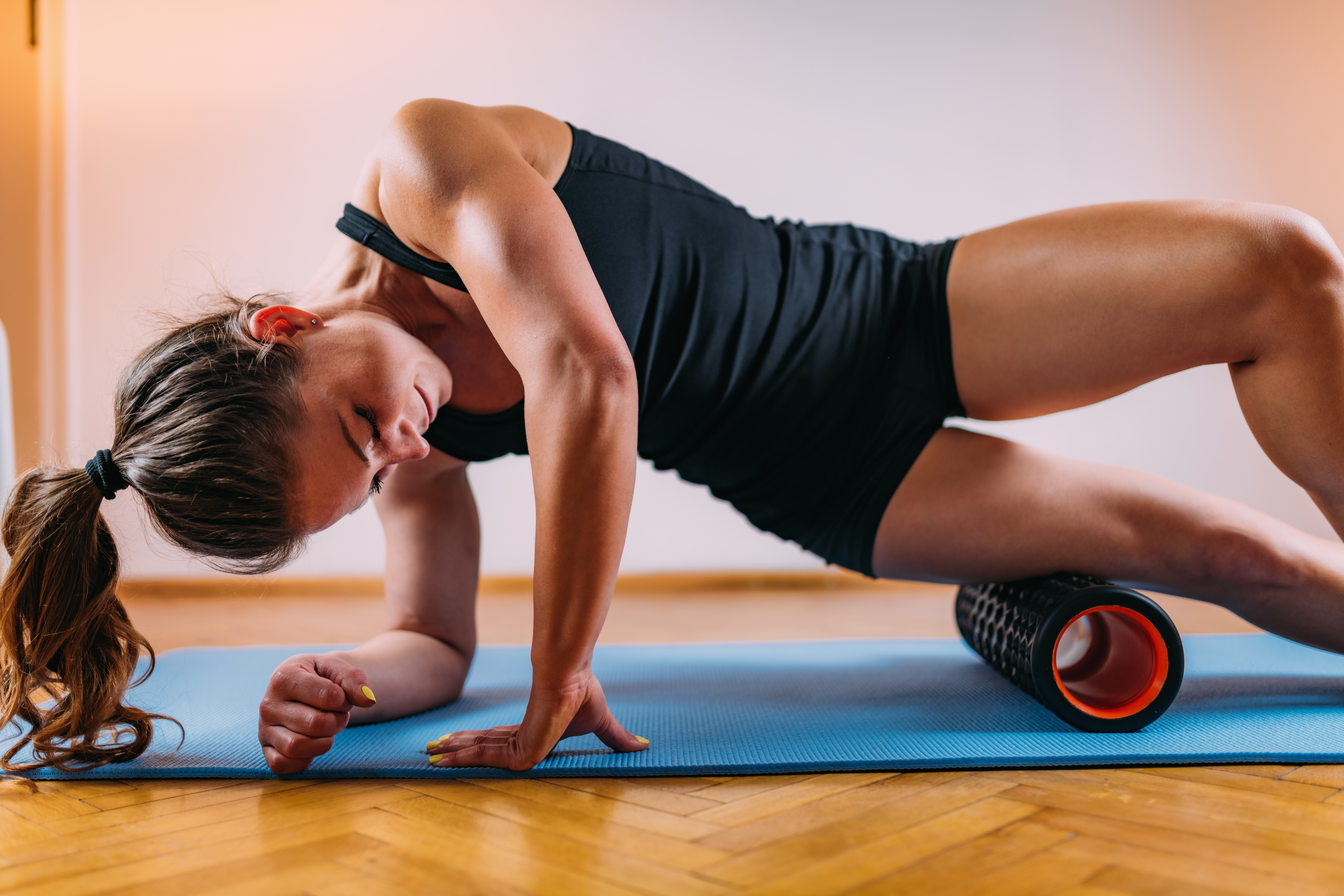
Perform stretches after your workouts when muscles are warm or as a separate 10-15-minute routine on rest days. Aim for daily stretching and 3-4 foam rolling sessions weekly for best results.
Self-Massage Techniques
-
Foam Rolling for Hip and Glute Release: Target the tensor fasciae latae (TFL) and gluteus medius—muscles directly connected to the hip dip appearance. Lie on your side with the foam roller below your hip bone. Roll slowly from your hip to mid-thigh, pausing on tender spots for 30-60 seconds. Apply steady pressure but avoid rolling directly over bones. Keep your top leg crossed over for lighter pressure, or stack both legs for deeper release.
-
Lacrosse Ball Hip Massage: Use a lacrosse ball on the gluteus medius for deeper trigger point release. Lie on your side and place the ball between your hip and the floor. Apply gentle pressure and make small circular movements to release knots and tight spots.
Essential Stretches
-
Hip Flexor Stretches: Tight hip flexors can contribute to poor hip alignment and make hip dips more apparent. Perform a low lunge with your back leg extended, dropping your hip toward the floor. Keep your torso upright and pelvis tucked under. Hold for 45-60 seconds per side. Add a gentle backward lean or raise your back leg onto a couch for a deeper stretch.
-
IT Band and TFL Stretch: Stand and cross your right leg behind your left. Lean your right hip out to the side while reaching your right arm overhead and to the left. You should feel the stretch along your outer hip and thigh. Hold for 30-45 seconds per side.
-
Pigeon Pose Hip Opener: This yoga pose targets deep hip muscles and improves overall hip mobility. From a tabletop position, bring your right knee forward and place it behind your right wrist. Extend your left leg straight back. Hold for 60-90 seconds per side.
-
Clamshell Stretch: Lie on your back with knees bent and feet together. Let your knees fall open to the sides, feeling a gentle stretch in your inner thighs and hips. Hold for 30 seconds and repeat 2-3 times.
Listen to Your Body: These techniques should feel good—avoid pushing through sharp pain, which could indicate injury.
Surgical Options for Hip Dip Correction
If exercise, diet, and clothing adjustments haven't achieved your desired results, surgical intervention can permanently correct hip dips. Several procedures are available, each with distinct advantages and considerations. Understanding your options helps you decide which approach might be best for your goals and anatomy.
Fat Transfer (Brazilian Butt Lift - BBL)
Brazilian Butt Lift involves harvesting fat from areas like the abdomen or thighs through liposuction and transferring it to the buttocks and hip areas. While effective for overall hip enhancement, this procedure focuses primarily on the buttock region rather than specifically targeting hip dips.
Dermal Fillers
Dermal fillers offer a non-surgical option using hyaluronic acid injections directly into hip dip areas, providing temporary results lasting 12-18 months. This method works best for minor hip dips and requires regular maintenance treatments.
Hip Implants
Silicone hip implants provide volume enhancement by surgically placing them over the hip bone area. This option suits patients with pronounced hip dips who lack sufficient fat for transfer procedures, but it involves longer recovery and implant-related risks.
Liposuction for Hip Dip Reduction
For some patients, strategic fat removal through liposuction can actually improve the appearance of hip dips by reshaping the surrounding areas. This approach works by removing excess fat from the love handles or lower back, creating a smoother transition from waist to hip and making hip dips less pronounced through improved overall contour.
Hip Fat Transfer (Hip Flip™) Offers Targeted Hip Dip Correction
Hip fat transfer, often called a "Hip Flip," represents the most precise surgical approach specifically designed to eliminate hip dips. Unlike a traditional BBL that focuses on buttock enhancement, this procedure targets the exact anatomical areas where hip dips occur—the depression between the hip bone and outer thigh.
The procedure begins with careful marking of both donor sites (areas with excess fat) and recipient sites (the hip dip areas). Common donor areas include the abdomen, flanks, inner thighs, or even smaller areas like the arms or knees, since only a modest amount of fat is needed for hip dip correction.
Fat harvesting with specialized techniques like AirSculpt uses smaller cannulas to minimize trauma and preserve fat cell viability. The extracted is treated to remove blood, oil, and damaged cells, leaving only healthy fat cells for transfer.
The transfer phase involves strategically injecting the purified fat into multiple tissue planes within the hip dip area. Surgeons place small amounts of fat in a grid-like pattern, ensuring even distribution and natural-looking results.
As AirSculpt founder Dr. Aaron Rollins explains above, hip fat transfer results are considered permanent once the transferred fat cells settle into their new location.
Advantages of Hip Dip Fat Transfer:
-
Natural Integration: Uses your own tissue, which integrates naturally with existing anatomy
-
Dual Benefit: Removes unwanted fat from donor areas while correcting hip dips
-
Customizable Results: Allows precise shaping to match your desired hip contour
-
Permanent Results: Successfully transferred fat cells establish permanent blood supply
-
Minimal Scarring: Tiny incisions (2 mm) heal virtually invisibly
-
Faster Recovery: Less invasive than traditional surgery, often allowing return to work within days
Taking the Next Step
Hip dips are a completely normal part of human anatomy, and the decision to address them is entirely personal. For those who choose surgical correction after exploring non-surgical options, modern fat transfer techniques offer effective solutions with minimal invasiveness.
Advanced procedures like AirSculpt's Hip Flip provide permanent results through a streamlined process that eliminates the need for scalpels, stitches, or general anesthesia. With typical downtime of just 48 hours, patients can achieve their desired hip contour while maintaining their daily routines with minimal interruption.
Schedule a complimentary consultation at AirSculpt Denver or the body sculpting clinic nearest you to discuss your specific goals, anatomy, and expectations to determine the best approach for your situation.
AIRSCULPT® YOUR DREAM FIGURE